Wedding Room Blocks: Courtesy vs Contracted and Protecting Revenue


Wedding blocks look simple and often are not. The difference between a courtesy block and a contracted one decides who carries the risk and what the hotel can collect.
Quick answer: A courtesy wedding block holds rooms at a group rate with no financial commitment, and unbooked rooms are released at cut-off. A contracted block commits the couple or family to a pickup level, with attrition if guests do not book. Hotels protect revenue by choosing the right block type for the date, setting a realistic block size, and being precise about what the master account pays versus what each guest pays.
What is the difference between a courtesy block and a contracted block?
A courtesy block carries no attrition: the hotel holds rooms until the cut-off date and releases whatever is not booked. A contracted block carries a performance commitment, so the signer owes damages if pickup falls below the agreed level.
Courtesy blocks are easier to sell to couples and usually smaller. Contracted blocks give the couple a larger block and sometimes perks, but they put the family on the hook. Many hotels offer courtesy blocks up to a set size and require a contract above it, or on peak dates when the rooms could sell to other guests.
- Courtesy block: small, no attrition, earlier cut-off, low risk for the couple, displacement risk for the hotel.
- Contracted block: larger, attrition applies, clear signer, more protection for the hotel.
How big should a wedding block be?
Size the block from the guest list, not the couple's hopes. Ask how many guests are traveling from out of town, how many are local, and how many are likely to share rooms.
Oversized courtesy blocks are a quiet form of displacement. Rooms held for a wedding on a strong Saturday are rooms not available to transient guests at a higher rate. A shorter cut-off date, or reducing the block at set checkpoints, limits that risk.
How does attrition work on a wedding block?
On a contracted wedding block, attrition works like any group contract: the signer commits to a percentage of the block, and pays damages on the shortfall below that level. Because the signer is usually a private individual, the clause needs to be explained clearly at signing.
For example (illustrative numbers only)
A contracted block holds 30 rooms for 2 nights, or 60 room nights, at $189, with an 80% performance clause.
- Required pickup: 60 x 0.80 = 48 room nights.
- Actual pickup: 41 room nights.
- Shortfall: 48 - 41 = 7 room nights.
- Attrition owed: 7 x $189 = $1,323.
Compare a courtesy block of 20 rooms for 2 nights (40 room nights) that picks up 22. The hotel releases 18 room nights at cut-off and has no claim. Whether that is acceptable depends on whether those 18 nights resold.
Should wedding rooms bill to a master account or to individual guests?
Most wedding guests pay for their own rooms, and a smaller set of charges goes to a master account paid by the couple or family. Put the split in writing and build it into the reservations before anyone checks in.
- Individual pay: guest rooms, taxes and incidentals, with a card on file for every room.
- Master account: rooms the family is paying for (for example, the couple and parents), welcome bags, hospitality suites, and any attrition.
- Routing instructions: written per reservation, so the front desk does not have to guess.
- Deposit and payment terms: when the master account is prepaid and when the final balance is due.
Mixed billing without routing is where disputes start. A guest who thought the family was paying, or a family surprised by a charge it never approved, both end in adjustments. For the mechanics of routing and final invoices, see group master account billing and reconciliation.
How do hotels protect wedding block revenue?
Protect revenue with a clear contract, pickup reports the couple actually reads, firm deposits and cancellation terms, and cards on file for every room. Weddings are emotional, so vague terms are rarely enforced.
- Choose courtesy or contracted based on date, size and demand.
- Share a pickup report at set checkpoints and before cut-off, in writing.
- Require a valid card and a clear cancellation policy on every guest reservation.
- Charge eligible no-show and late cancellation fees consistently (see no-show and cancellation fees).
- Collect master account deposits on schedule and the balance before or at departure.
- Document damage in hospitality suites and guest rooms with photos the same day.
- Invoice any attrition promptly with the final bill (see hotel group contracts and attrition).
What goes wrong most often with wedding blocks?
The most common problems are guests who book outside the block, fees waived at check-in to avoid a scene, and charges posted to the wrong folio. Each one is small; together they erode the value of the event.
- Guests book through an OTA at a lower rate, so the block looks short and the hotel pays commission.
- No-show fees for guests who skipped the wedding are never charged.
- Late-night incidentals post to a guest folio with no card authorization.
- Family-paid rooms bill to guests, or guest rooms bill to the master, and are corrected by write-off.
How does this connect to revenue leakage?
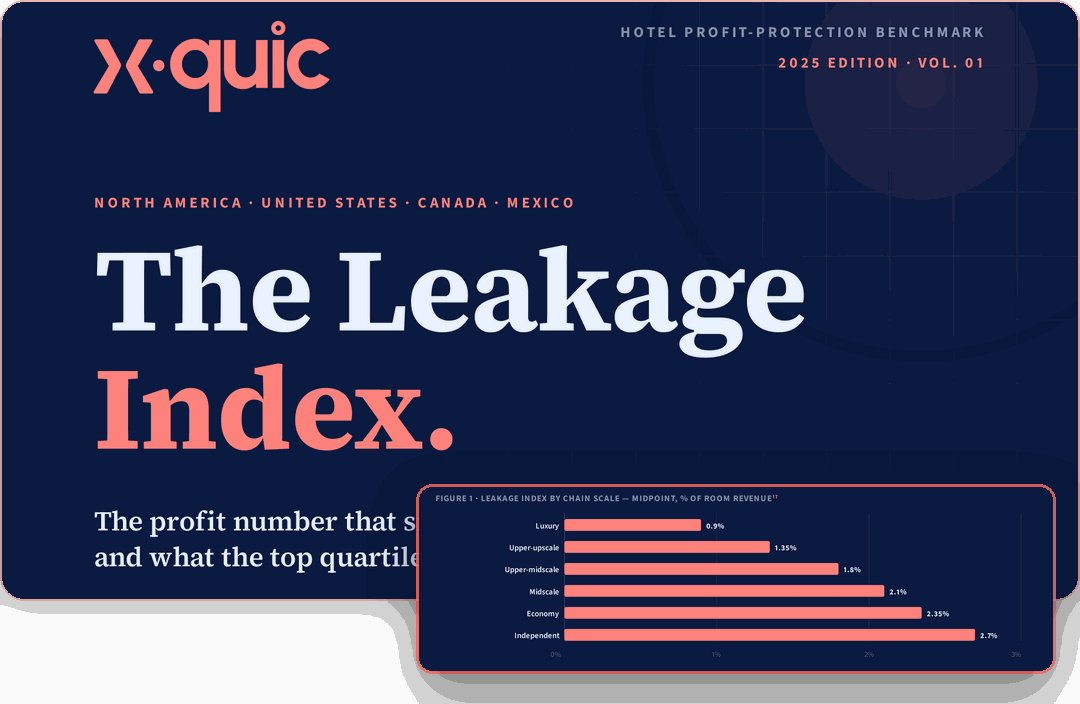
Wedding weekends combine several of the leaks x·quic audits: uncollected no-show and cancellation fees, OTA commissions on stays that changed, and chargebacks on disputed charges. Hotels typically lose 3–12% of revenue to leakage overall. A free 1-Year Profit Audit on your own data shows where it happens at your property, with no cost and nothing to install. See FAQ for how the audit works.
Frequently asked questions
Do courtesy wedding blocks have attrition?
Generally no. That is what makes them courtesy blocks. Unbooked rooms return to inventory at cut-off with no charge to the couple, which is why hotels often limit their size or the dates they are offered.
Can a hotel charge the couple for guests who did not book?
Only under a contracted block with an attrition clause the couple signed. Explain the clause clearly at signing, and confirm enforceability with your attorney before billing a private individual.
Do guests who book through an OTA count toward the wedding block?
Only if the contract allows it. Some hotels credit them to reduce disputes. Either way, ask the couple for a guest list so you can identify them.
When should the wedding master account be settled?
Set it in the contract. Many hotels take deposits in advance and require the balance before or at departure, which avoids chasing a private individual for payment afterward.
See your own leakage number.
Your free 1-year Profit Audit runs all six 360° audits on your own data and shows exactly what was lost and what is recoverable. No cost, no commitment, nothing to install.
Related guides



One email a month on where hotel profit leaks.
New guides, recovery data and what we are seeing across OTAs, crew lodging and payments. No spam; unsubscribe anytime.